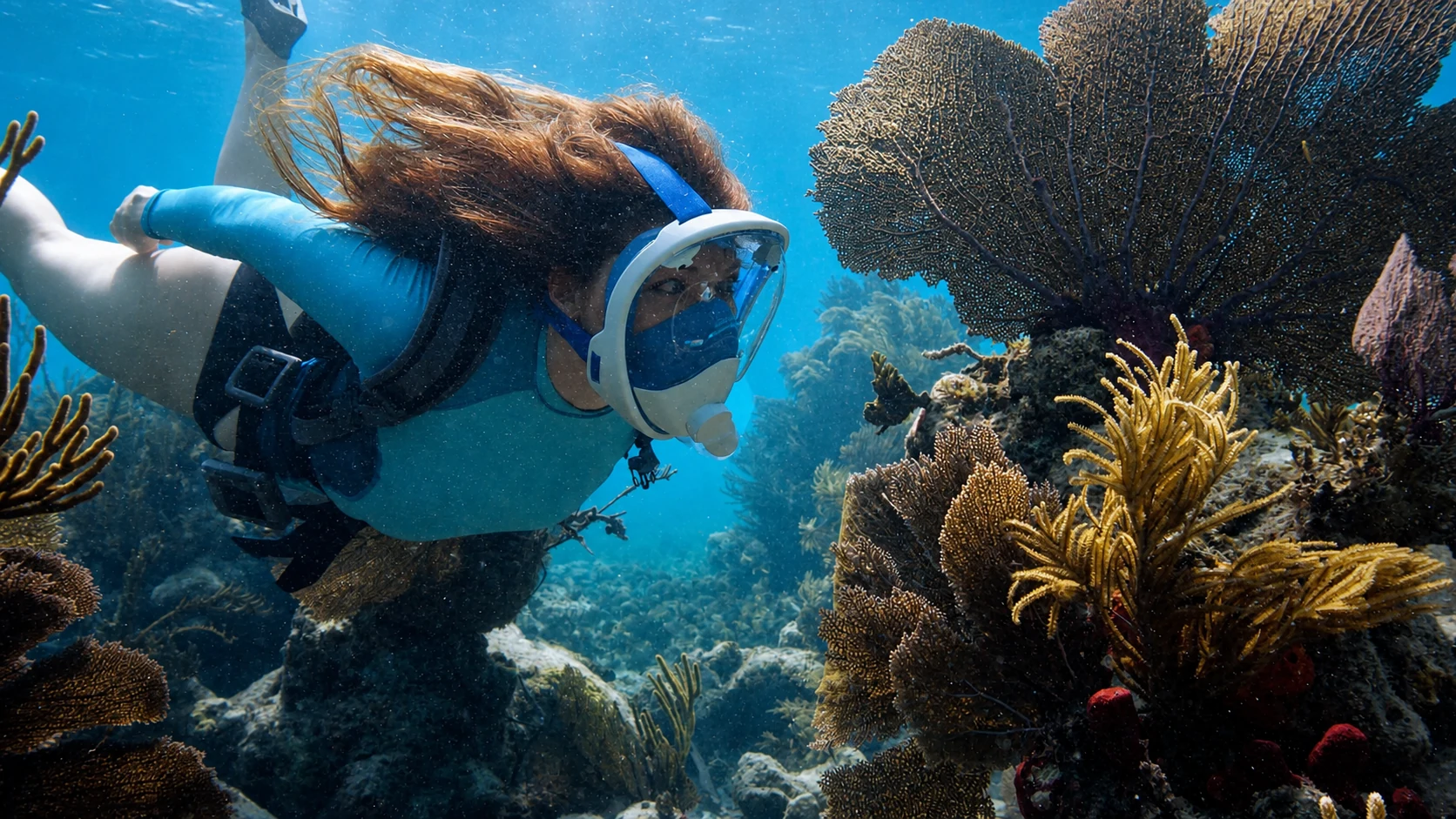
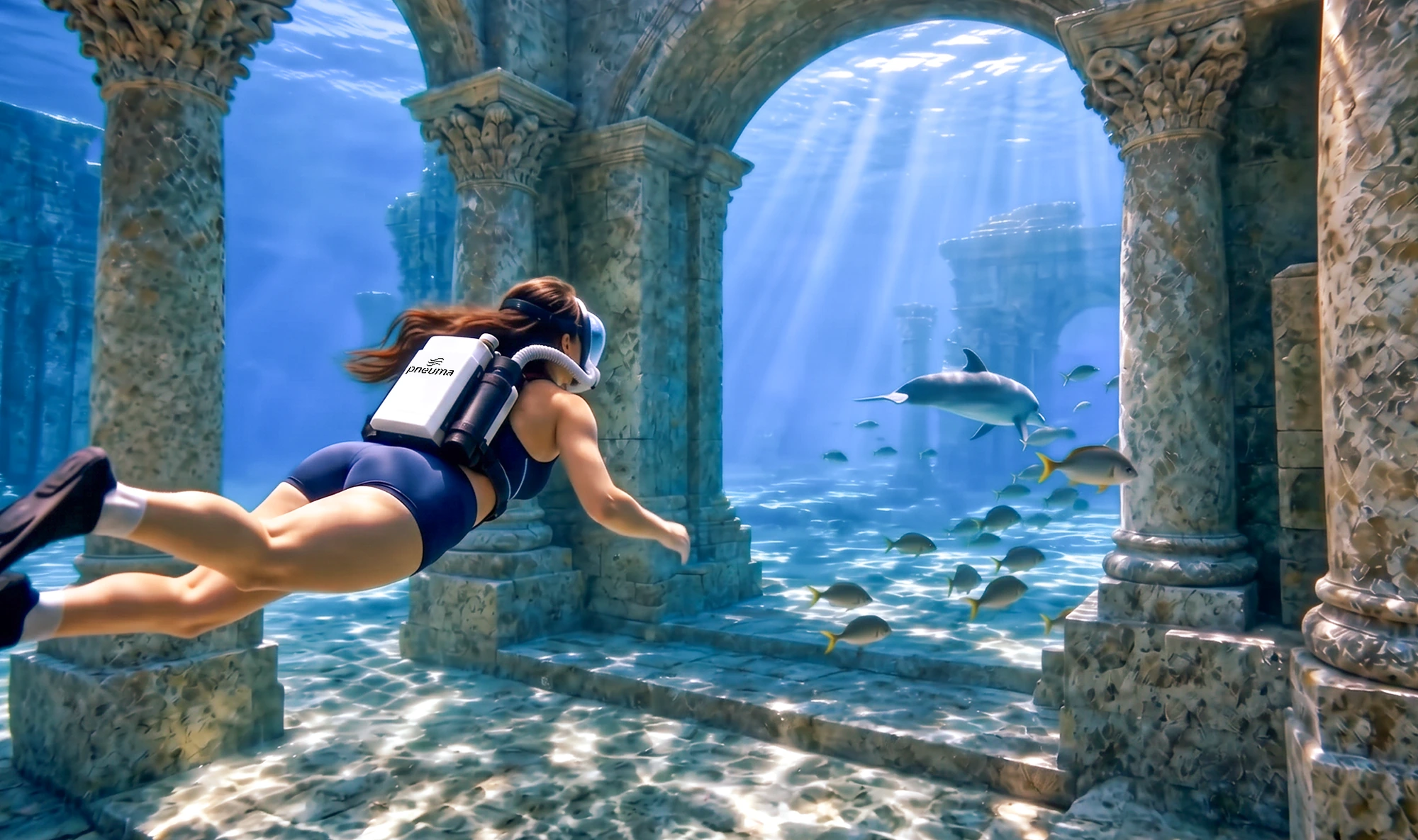
A guest in weightless flight through a submerged colonnade wearing a Pneuma unit

We turn created waters into underwater attractions.

The hospitality industry has spent forty years building water attractions. A few venues offer SNUBA or a helmet walk to a handful of guests. Almost everyone else is still on the surface. Blue71 makes two products that change that, with one AI safety system that lets an operator say yes.

45 minutesUnderwater, untethered
Instant accessNo prior experience needed
No capitalWe own the fleet, we share the revenue
PneumaDive becomes a prime feature. Here is how it works.

The category

Created waters

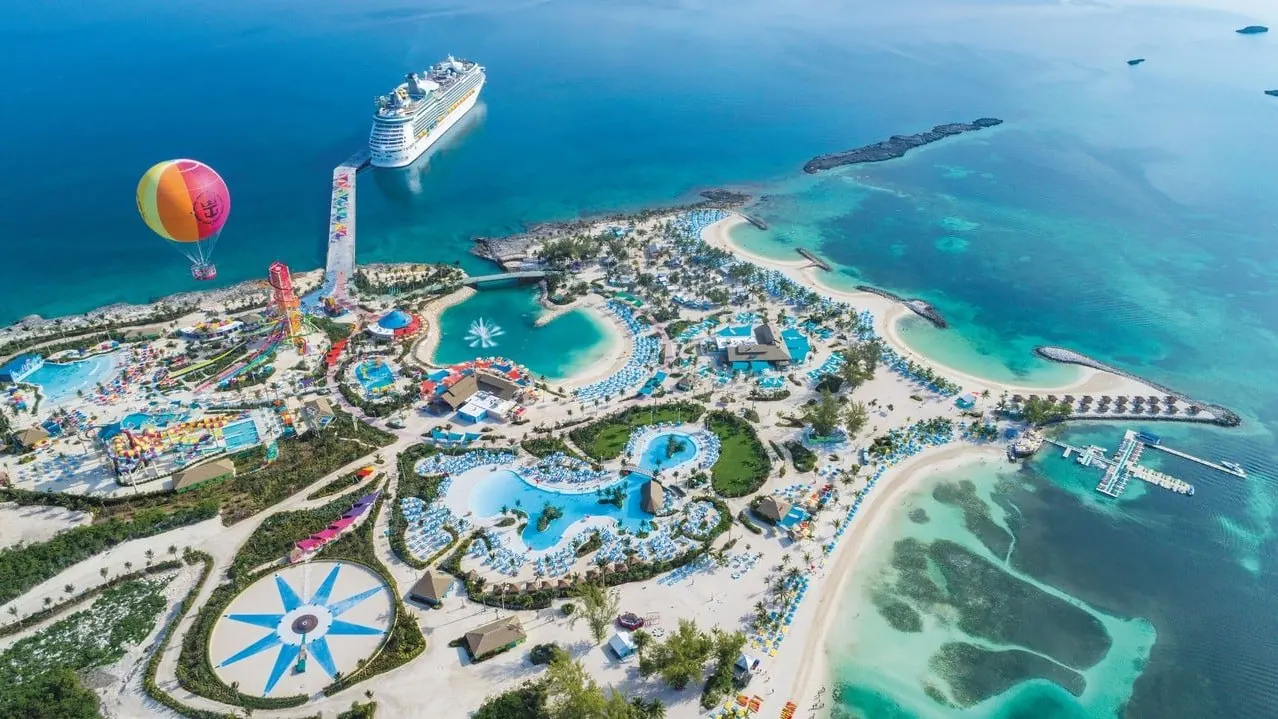
Water is the attraction the industry is building now. Lagoons, private islands, engineered reefs, and other water amusements: billions of dollars of it, because water is what sells the room.

A body of water earns only what you can safely let guests do in it, and for almost every guest that has stopped at the surface. Blue71 is the missing link: the way to safely put ordinary guests into water an operator has already paid to build, and finally earn what that investment is worth.

Some of it is fully engineered and enclosed. Some of it is a stretch of nearshore reef a resort has buoyed, staffed and made its own. The line that matters is not how the water was made, it is who runs it.

If an operator decides who enters the water, what they do in it, and what they pay for the privilege, that is a created water. Created waters are waters under management: resort lagoons, private islands, parks, aquariums, managed reefs. An operator controls access, activity and price. Everything needed to run a guest experience is already there except the experience itself.

Type 01

Cruise line private destinations

Oasis lagoons, twin lagoons, near shore reefs and waterparks built for tens of thousands of guests a day, where water is the headline attraction and the line owns the whole island.

Type 02

Resort and engineered lagoons

From four-acre saltwater lagoons at destination resorts to the Crystal Lagoons portfolio, with more than 1,000 licensed projects across 60 countries. Clarity, depth and temperature are controlled by design.

Type 03

Nearshore resort water

A house reef, a buoyed swim area, a marine park frontage. Not enclosed, but staffed, programmed and sold by the resort, with the same guests and the same duty of care. This is the largest group of the four.

Type 04

Aquarium habitats and dive pools

Engineered reefs, million-gallon exhibits and themed sunken cities, where the underwater scenery already exists and only certified divers can currently reach it.

The easiest water in the world to run an attraction in

Conditions are known and they hold all season, so the experience can be scheduled, staffed and sold like any other ticket. Supervision, screening and emergency cover are already part of the venue. The guest is already on site and already acquired.

That combination is what turns going underwater from something booked by appointment into something sold at volume, and it lets an operator promise a guest the same forty-five minutes in March that it promises in August.

Aerial view of a private destination and its lagoons
Tens of thousands of guests a day, walking past water they can only look at.

Two products, one system

PneumaDive is the main attraction. PneumaSurface is for everyone else.

PneumaDive is what a venue leads with: the premium experience that takes an ordinary guest underwater, and the ticket nobody else can sell. PneumaSurface extends the same platform back up to the surface, where the largest group of guests already swims and where the operator already carries its largest risk.

They run on one safety system and report to one dashboard, so a venue running both sees every guest in the attraction on the same screen, whether they are forty-five feet down or floating on the top.

PneumaDive

The headline attraction

Who it is for
The guest who has never dived and never will get certified
What it does
45 minutes of weightless, untethered flight for a guest who has never been underwater
What the guest wears
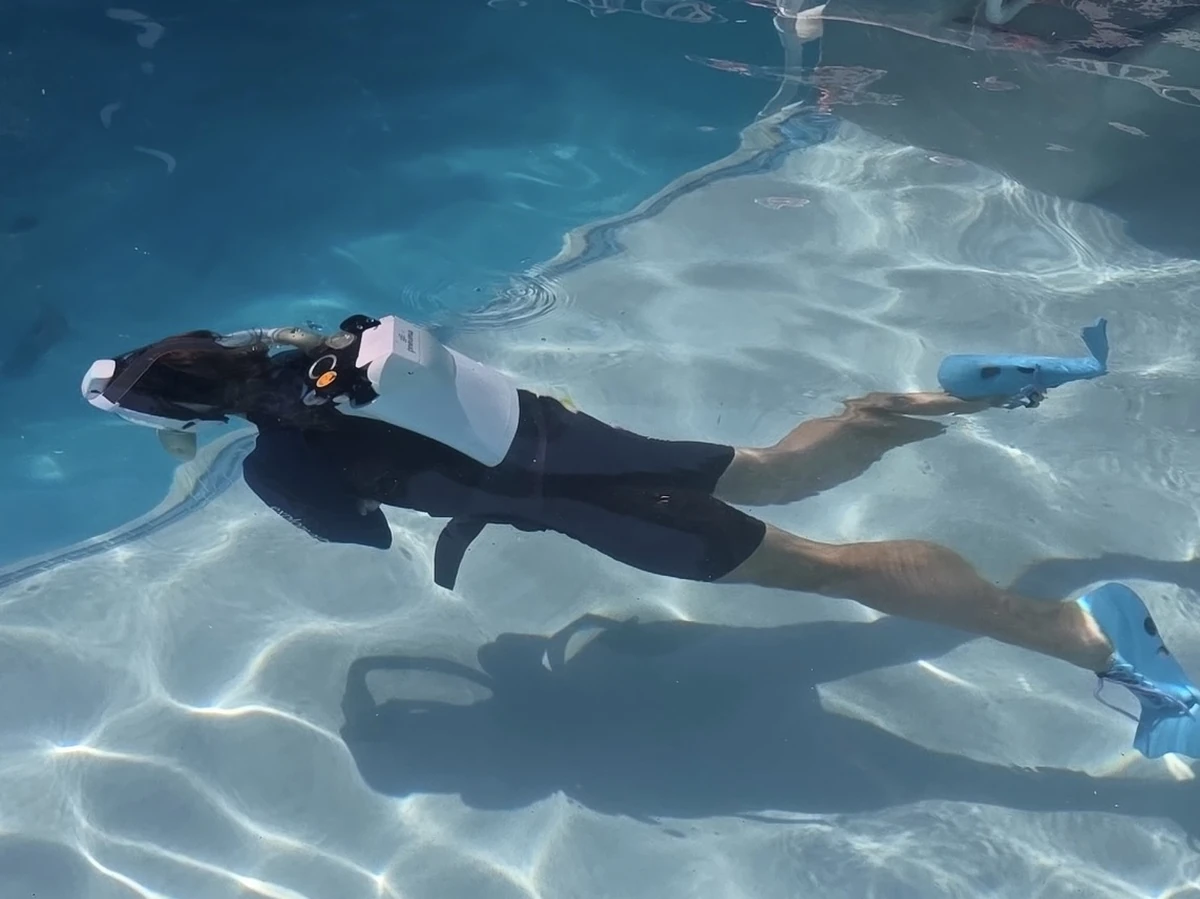
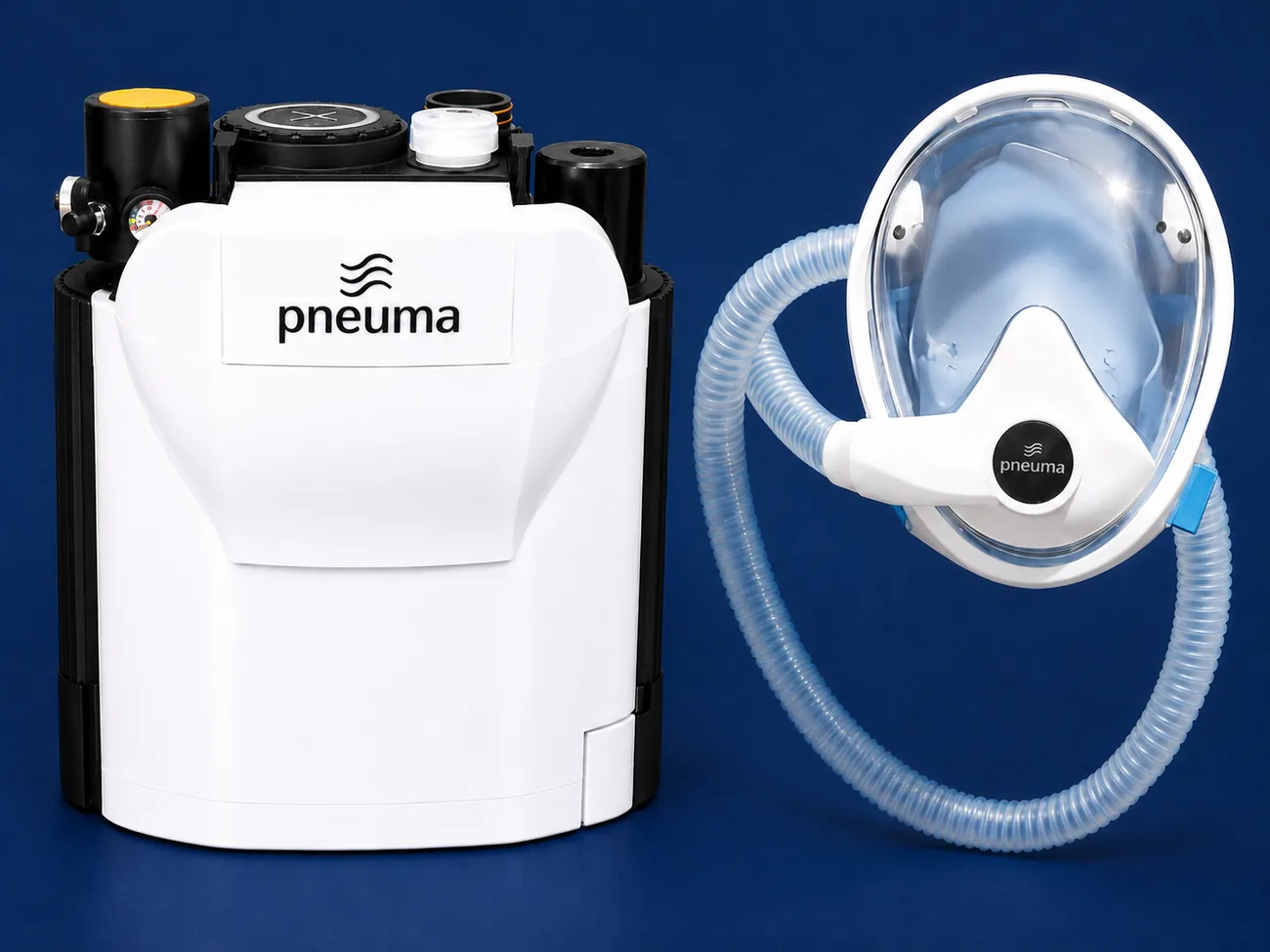
A twelve-pound pack and a full-face mask, worn like a daypack
What the venue installs
Something worth going down to see
Revenue to the operator
Margin, from a premium ticket nobody else can sell
How it works

PneumaSurface

The safety layer above it

Who it is for
Every snorkeller and swimmer already in the water
What it does
Detects the drowning a lifeguard cannot see
What the guest wears
A module that fits the snorkel the venue already hands out
What the venue installs
Nothing in the water
Revenue to the operator
Volume, from day one, across the whole swim population
How it works

A venue can start with either one. Most start with PneumaSurface, because it needs nothing built, and add PneumaDive when there is something worth going down to see.

Product one · PneumaDive

45 minutes of weightless, untethered flight for the guest who has never been underwater.

No experience needed, instant access, and a video to share when they surface.

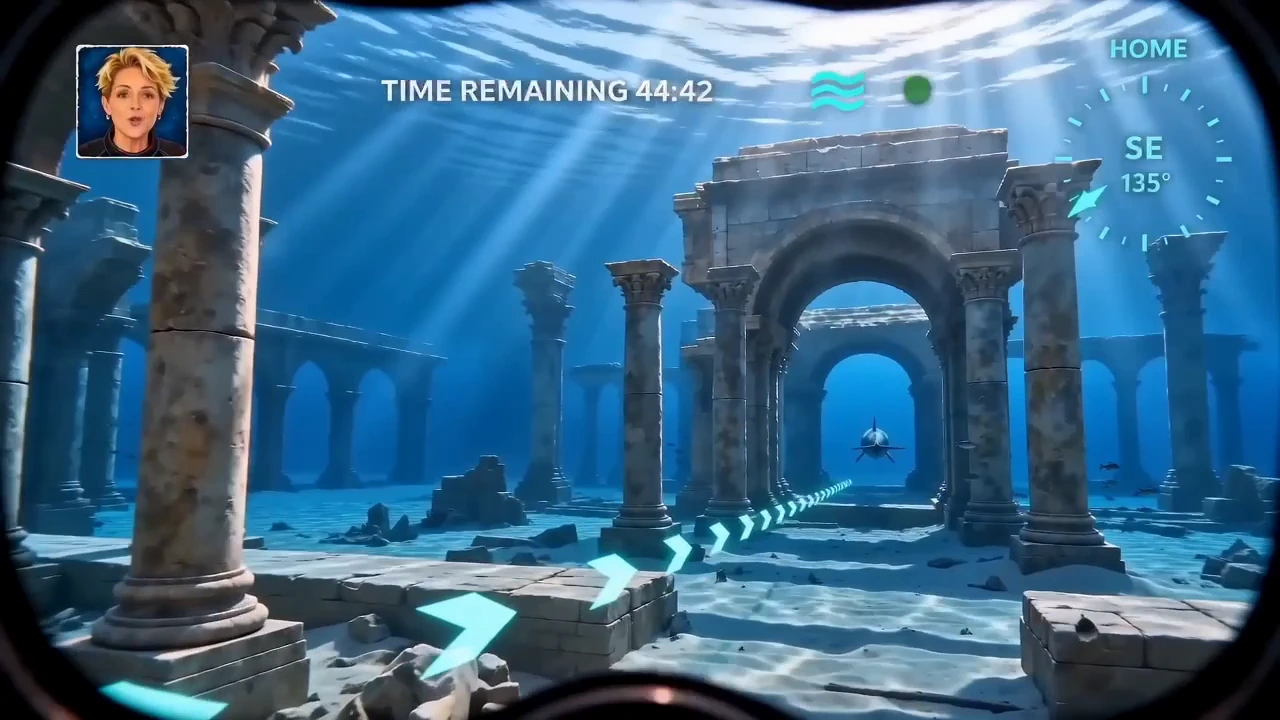
A guest in weightless flight through a submerged colonnade
Forty-five minutes of flight, for a guest who has never been underwater.

What the guest does

  1. Books it like a cabana

    Three things happen on the mobile app before the guest reaches the water: an inclusive medical screening, the water activity waiver, and a short orientation. They are in the water within twenty minutes.

  2. Follows a guide, not a gauge

    An in-mask avatar leads a mission across the habitat or reef, shows the way, and adjusts depth to how the guest is doing. They breathe normally through the nose and mouth, and make no decisions.

  3. Stays in the moment for 45 minutes

    Pneuma watches breathing, movement and comfort every second, and brings the guest shallower or to the surface on its own if anything drifts out of range.

  4. Surfaces with a story

    An auto-edited highlight video is ready to share before the guest reaches the towel, which is the destination's marketing done by the guest.

What the venue provides

PneumaDive gives a guest forty-five minutes underwater. The venue gives them something to explore.

At an aquarium or a themed dive pool, it already exists. At many lagoons it is already there. Where the floor is bare sand, Blue71 helps your team design and install it: a sculpted reef, a sunken ruin, a lost city. The Pneuma avatar then leads each guest along the path. That is worth deciding before the next lagoon is poured rather than after.

The guest's view from inside the mask: an avatar, time remaining, a compass heading and navigation arrows across the seabed
What the guest sees. The avatar, the time remaining, the heading, and arrows to follow.

Seven years of it, in the water

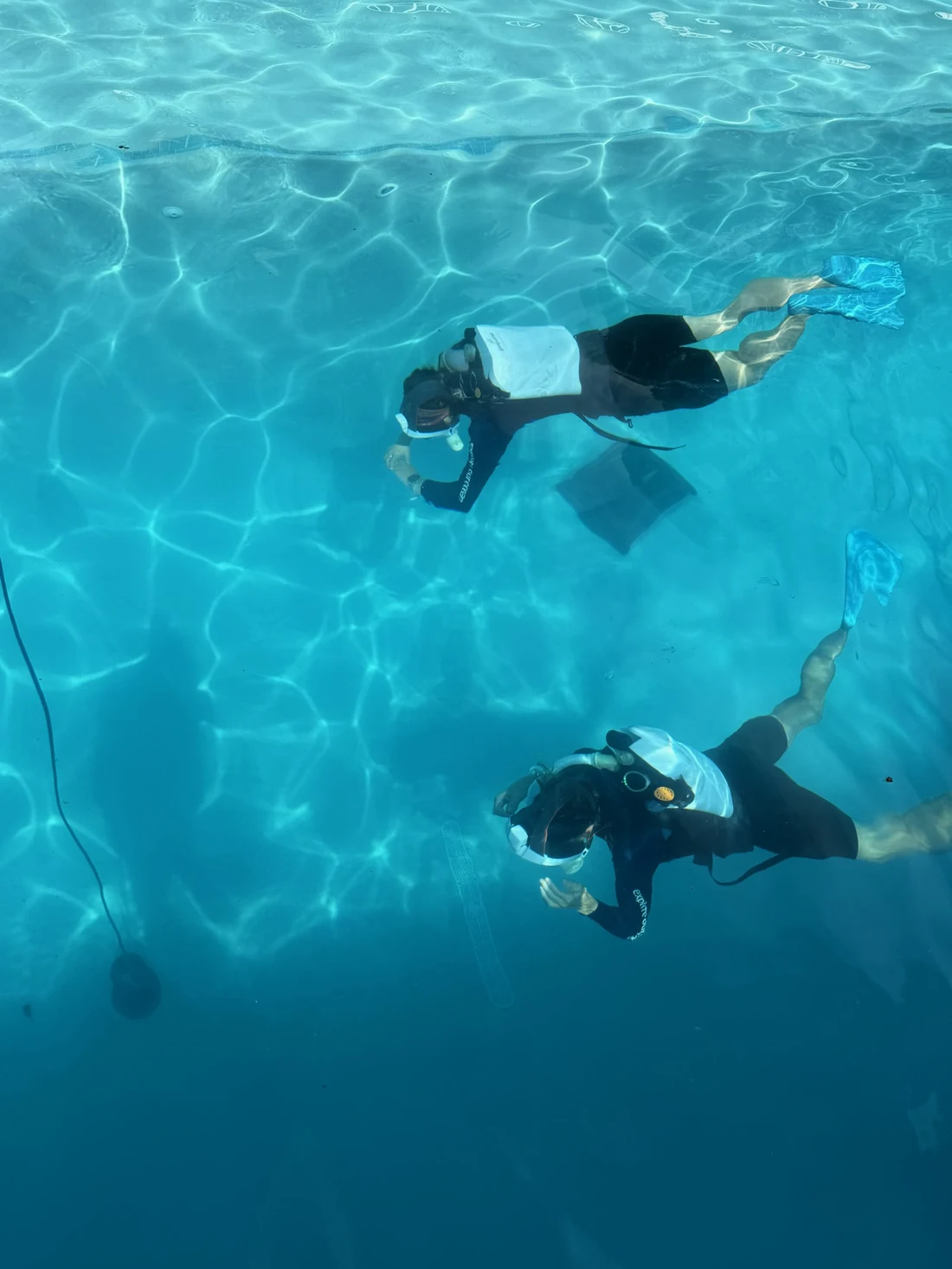
Two divers swimming together wearing Pneuma units
Two guests under way together, no tanks, no bubbles.
Two divers in a test pool wearing Pneuma units, the status ring lit on the mask
Start shallow, earn more depth.
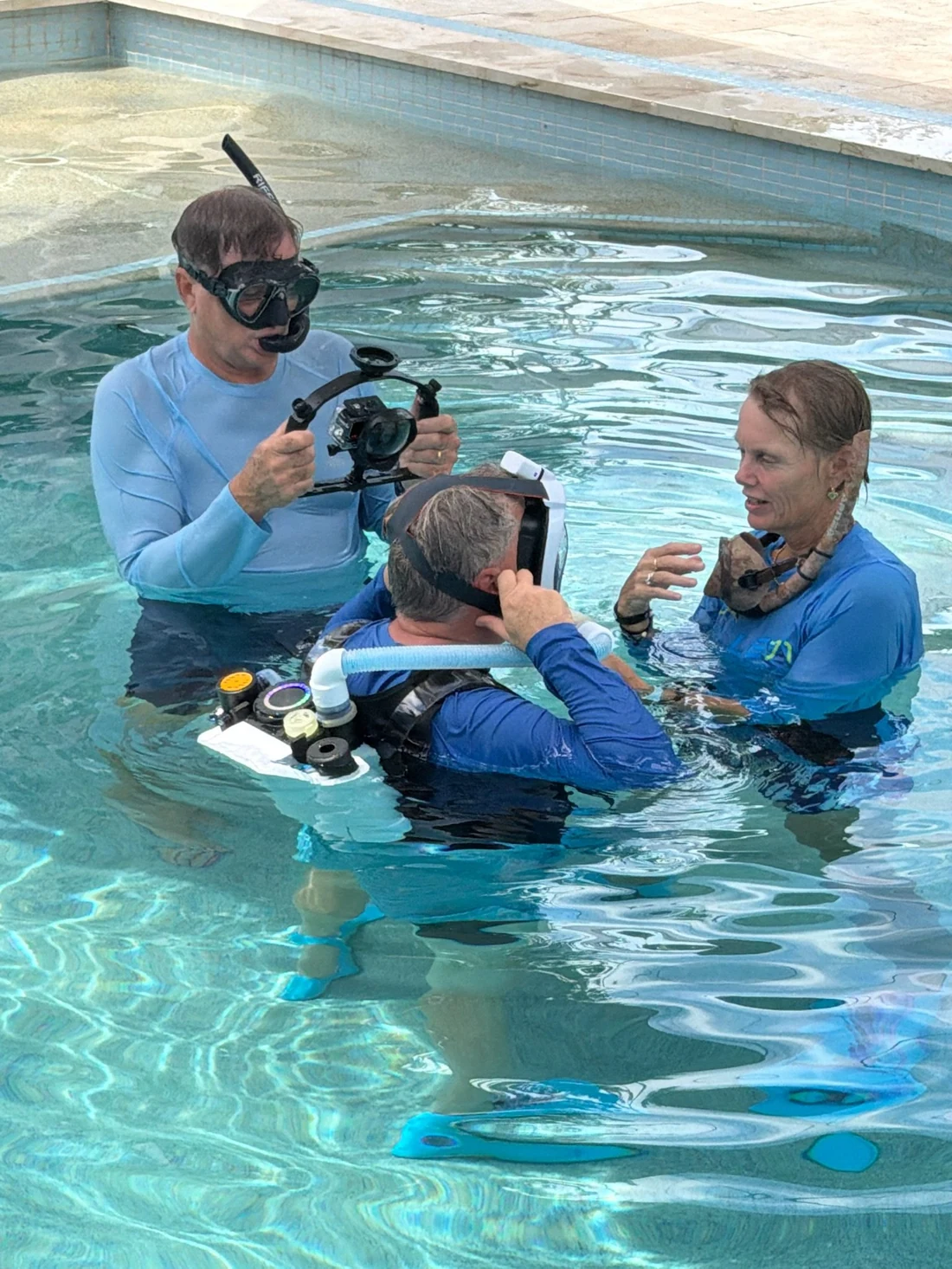
Test team fitting a mask on a diver at the surface
A short briefing before the Go Code is given.

Product two · PneumaSurface

Every swimmer in the water, watched by something that never looks away.

PneumaDive can take a thousand guests a day under the water. PneumaSurface looks after everyone still on top of it. At nearly every created water, snorkeling is the largest group of guests the operator has, and the largest in-water risk it carries.

PneumaSurface puts the same AI on each swimmer and every swimmer on one screen, so a guest in difficulty is identified before an incident occurs.

It matters because of a condition most people have never heard of. Rapid onset pulmonary edema comes on near shore, in calm water, with few if any signs of distress: breathing through a narrow tube draws fluid into the lungs, and oxygen falls, then strength, then consciousness. There is nothing for a lifeguard to see. There is something for a sensor to hear.

ROPE

26% of Hawaii ocean drownings between 2012 and 2021 were snorkeling

Second by second monitoring

AI evaluates every swimmer in the water

Before problems develop

AI identifies issues before they become incidents

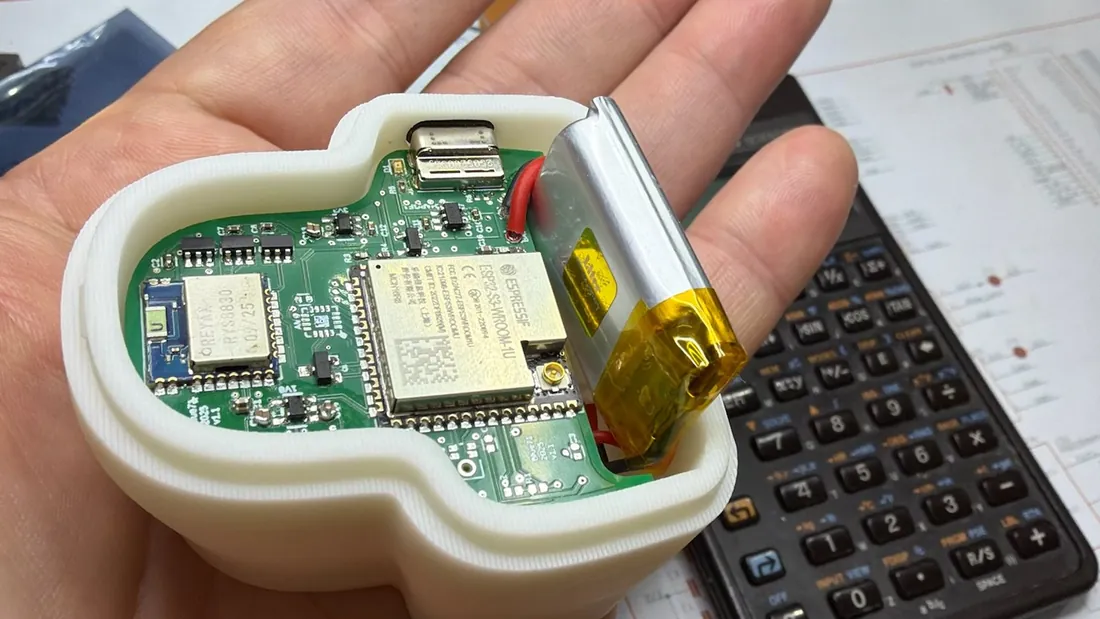
The PneumaSurface module in the palm of a hand, showing its processor, sensors and battery
AI processor, bio sensors, communications and location tracking, sized to fit an existing snorkel.

Three things it does that a lifeguard cannot

It reads breathing and stress. Sensors in the airflow path feeds a AI model that flags the ROPE signatures before trouble sets in. A swimmer with developing ROPE looks just like any other swimmer.

It triages. Geofencing, submersion detection and acoustic distress detection feed one dashboard showing every swimmer, ranked by severity, so attention goes where it is needed.

It talks. Two-way audio lets a lifeguard calm or instruct a swimmer back to shore or boat without putting a responder in the water first.

Why an operator says yes quickly

Snorkeling is the largest water activity at nearly every created water, and the single largest liability an operator carries there. PneumaSurface replaces the snorkel the venue already issues. There is nothing to build, nothing to sink, and no change to how guests are dispatched.

It is the product that can start at a venue this season, which is usually the right place for the relationship to begin.

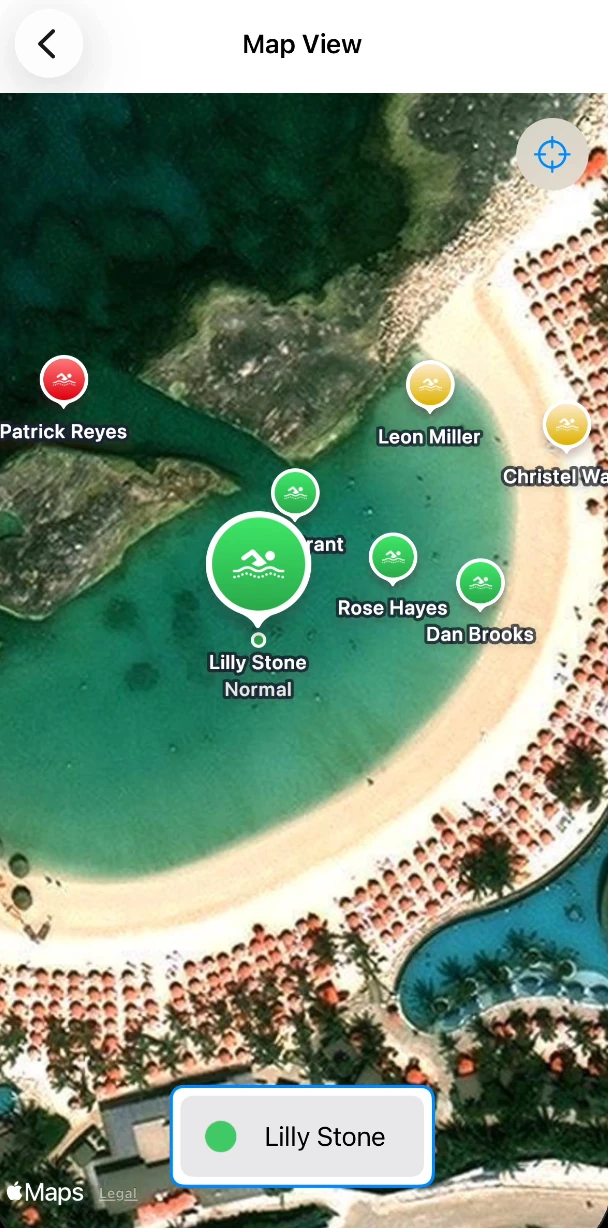
The PneumaSurface map view: every swimmer in the lagoon shown by name with a status colour, green for normal, amber for watch, red for attention
Every swimmer by name and position, color-coded by status, so attention goes where it is needed first.

Source: Snorkel Safety Study, Hawaii Department of Health and Hawaii Tourism Authority, final report 2022. PneumaSurface patent filed August 2026, not yet granted.

The safety system both products share

In scuba, 95% of incidents start with the person, not the equipment.

Eighty percent of scuba incidents stem from diver error. Another fifteen percent from health or stress. Pneuma was designed to address both.

80%Diver error
15%Health or stress
0Decisions Pneuma asks the guest to make

Four layers, in order

  1. Remove the decisions

    The guest has no discretionary control during the dive. No gauge to read, no buoyancy to set, no air to manage, no choice to get wrong. An in-mask avatar leads the mission. When there is no decision to make we have fewer errors.

  2. Watch everything, constantly

    PneumaDive makes over 40 checks every second for air supply, respiration, mobility and cognition. The system knows a guest is in trouble before the guest does, and well before anyone watching from the surface could.

    The same AI watches the whole attraction, not one guest at a time. Every Pneuma unit and every PneumaSurface swimmer reports to a single dashboard, so the venue sees its entire body of water at once, ranked by who needs attention first.

  3. Act without asking

    A three-tier response. It redirects the guest, then brings them shallower, then surfaces them automatically. It does not send a warning and hope. It tells the guest what to do and when to do it.

  4. Fail soft

    Closed by design, and engineered to a six-sigma reliability standard. The loop recycles every breath instead of drawing down a tank, so there is nothing to run out of, and the system rather than the guest holds authority over the gas. Behind that sit a five-minute reserve, a mask that cannot be dislodged, and a pack that releases in seconds so a responder can reach the guest fast.

The three questions every operator asks

"Is there a pressure cylinder on my beach?"

No. The scrubber cartridge is solid and holds no stored pressure. The solid oxygen canister ships under 49 CFR 173.306, the same federal rule that covers sunscreen and hairspray.

"We do not allow full-face snorkels."

The incidents behind that policy trace to patent-avoiding copies. Full-face masks have been used safely for decades in commercial, scientific, mine-rescue, fire and hazmat work and by the U.S. Navy. Pneuma masks are built by Ocean Reef Group in ISO 9001 facilities.

"Who is in the water right now?"

Continuous dispatch. Each unit is keyed to one guest by a biometric wristband, so it cannot be used by anyone else. Activation, dispatch and recovery are run by attraction staff, with responder displays at the surface.

Who says so, other than us

Divers Alert Network

The dive industry's principal insurance underwriter has indicated it is prepared to insure the Pneuma program for both testing and commercial deployment.

PADI and TDI/SDI

Initial discussions of agency certification for the Pneuma program from two of the four leading global dive agencies.

Ocean Reef Group

Masks built in ISO 9001 certified facilities in Genoa and Vista, California, by the manufacturer that created the first full-face dive mask for recreational scuba.

StarGuard Elite

Documentation mapped to the six audit domains that cruise private destinations are graded against.

RSTC

Medical screening and waivers with decades of legal use, plus continuous dispatch, biometric wristbands and responder displays.

Seven years of testing

Hyperbaric chamber trials, lab pressure testing, open-water testing at Rainbow Reef and at Jules' Undersea Lodge, and a production-intent fleet in the water.

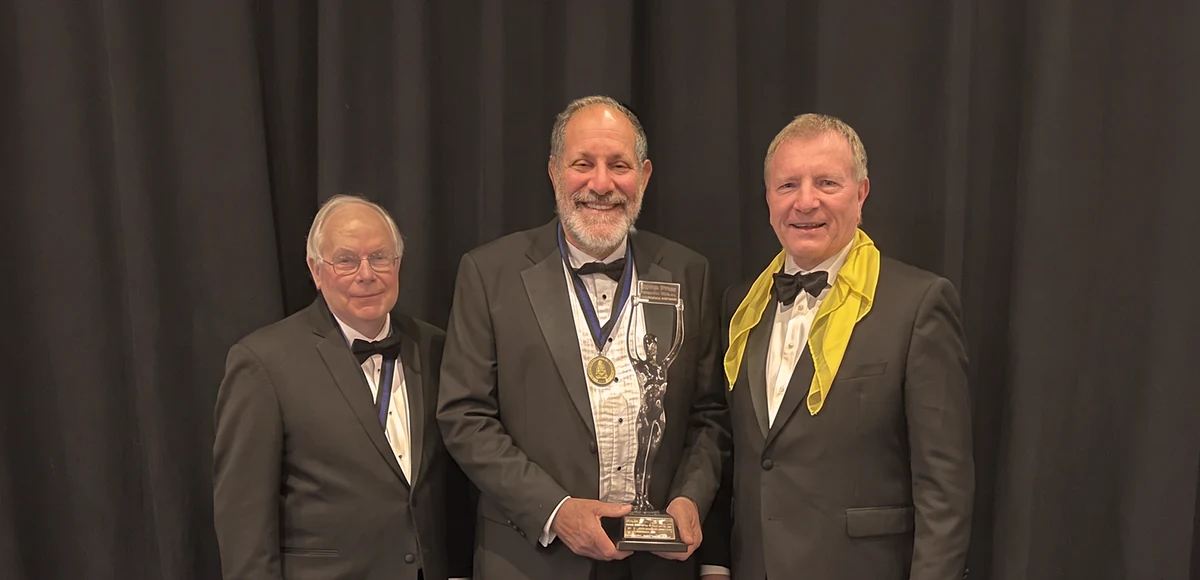
John Clarke, Jeff Bozanic and Forrest Gauthier
John Clarke, Jeff Bozanic, Forrest Gauthier.

Three people - One hundred and twenty years of dive safety and leadership

Dr. John Clarke Scientific Director of the U.S. Navy Experimental Diving Unit for twenty-eight years, ran hundreds of life-support equipment evaluations, holds patents on closed-circuit breathing apparatus, and earned a NOGI Award for Science.

Dr. Jeff Bozanic Editor of the NOAA Diving Manual, wrote Mastering Rebreathers, member of the standards committees of NAUI, SDI, TDI and IANTD, and earned a NOGI Award for Training and Safety, Distinguished Eagle Scout, and a Rolex honored diver.

Forrest Gauthier Certified diver since 1971, a PADI Instructor Trainer for 25 years, holds a portfolio of dive patents, authored technical diving and hyperbaric medicine courses, and is a DuPont and Explorers Club Fellow.

These are three of the people who define the rules that other operators follow.
For operators

You supply the water. We supply everything else.

Blue71 does not sell equipment and does not ask for capital outlay. We own and service the fleet, run the experience, and are paid out of a share of what it earns. It is the model WhiteWater West and FlowRider have run inside cruise and resort venues for sixteen years.

The operator provides

  • The water, which is already built and already staffed
  • The guests, who have already paid to be there
  • A slot on the activity menu and a booking channel
  • Alignment, not capital

Blue71 provides

  • The fleet, owned and maintained by us, with a reserve held back so the venue never goes dark
  • Disinfection between guests and consumable cartridge logistics
  • The safety architecture, the standards mapping and the audit documentation
  • Staff training, guest orientation, waivers and the content platform

What the ceiling looks like

One operator moves 15,000 guests a day through a single private destination, seven days a week, and 48,000 a day across all of its destinations combined. More than 30% of those guests already pay for something to do in the water.

That same operator estimates up to 10% would pay $199 for a Pneuma dive.

48,000Guests a day, one operator
30%+Already buy an in-water activity
$955,000A day, at 10% take-up and $199

Guests are already paying for a premium position at the water. Offering a safe underwater adventure for all of them is an unforgettable, repeatable experience.

Guest volumes, participation rates and take-up are one operator's own figures, shared in commercial discussion. Forward-looking, and not a forecast.

A Pneuma kiosk installed at a dive operation
The venue-side footprint: booking, orientation and content pickup in one kiosk.

Technology and IP

Seven years of engineering, and a portfolio to defend it.

Fifteen patent filings with priority dates reaching back to 2018, five of them granted, covering more than six hundred claims across the breathing system, the guidance layer and the venue platform.

Exclusivity is what lets an operator lead a launch with this and hold the position while rivals look for an answer. When they come looking, the answer routes back through Blue71.

The Pneuma unit and full-face mask
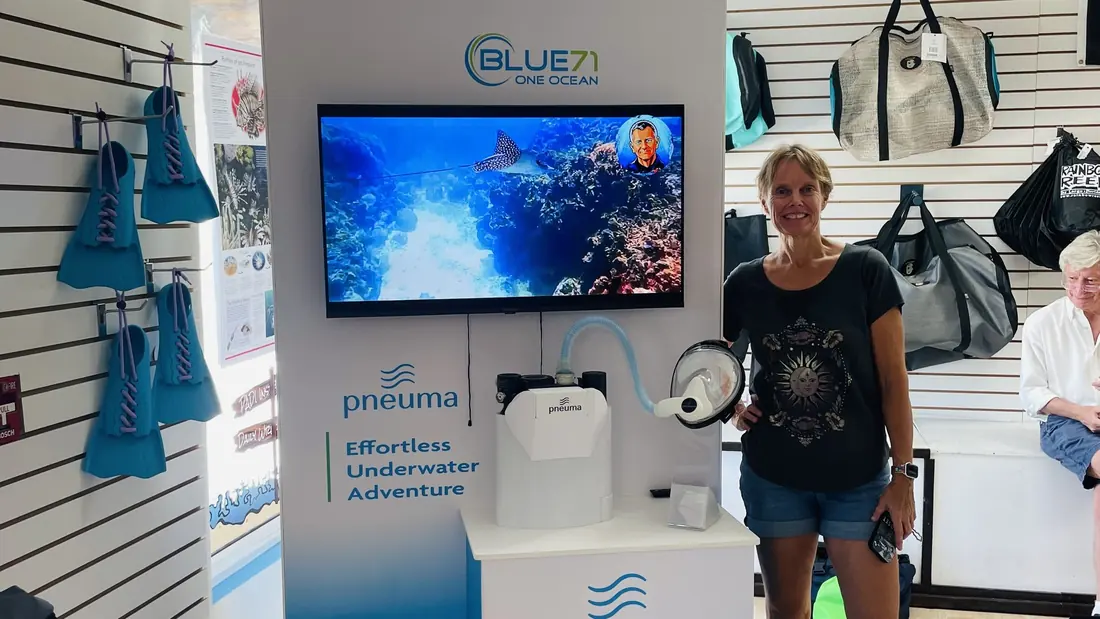
Twelve pounds, worn like a daypack. The operator never buys one.
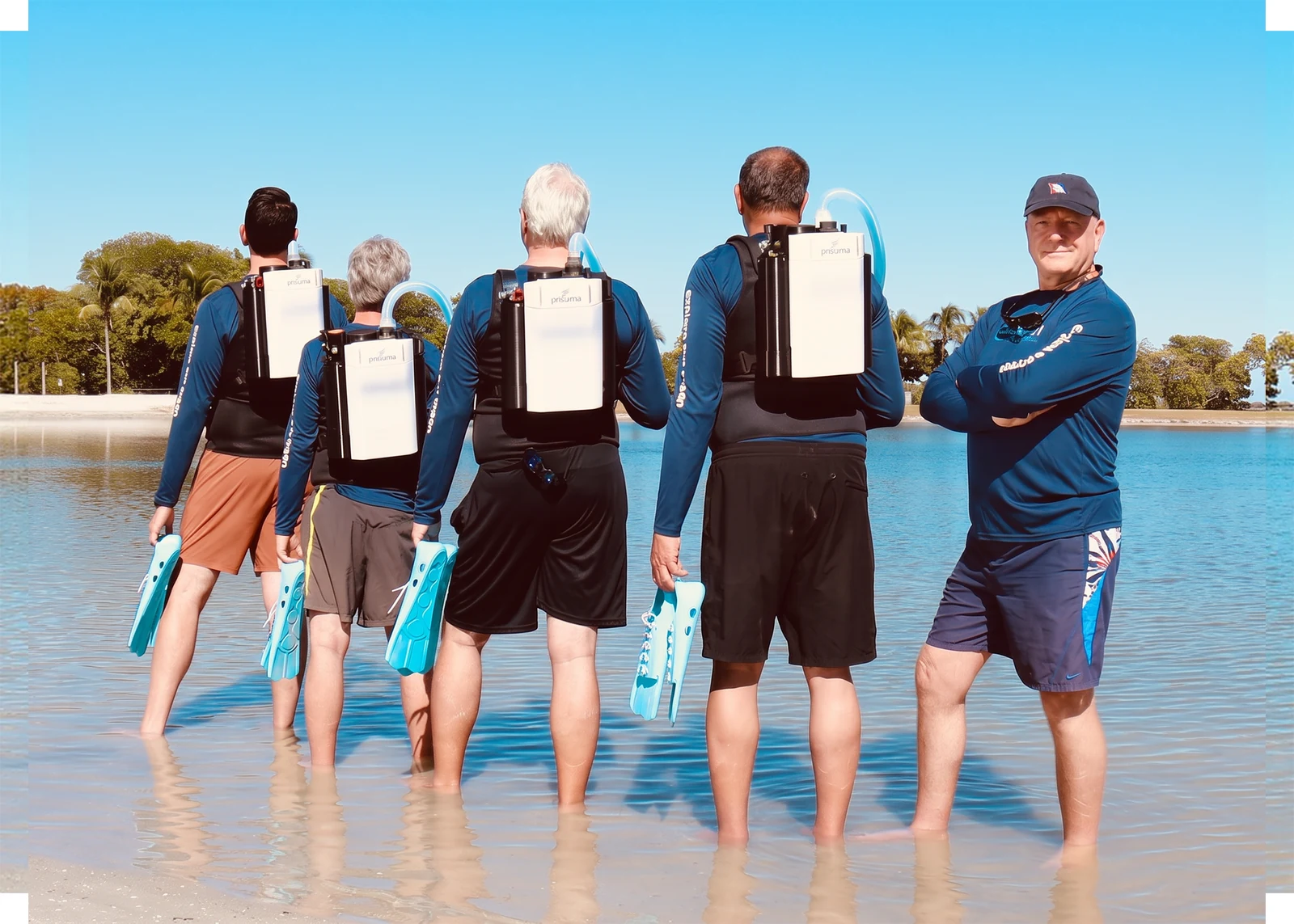
The Blue71 team walking into the water in Key Largo
Production-intent fleet, Key Largo.

The data every dive leaves behind

Pneuma records actual consumed diet (from O2 conversion), metabolic efficacy, breathing rate and volume, mobility and cognitive response, alongside water clarity, particulate, temperature and image mapping. It is a dataset nobody else is positioned to collect, and it compounds with every venue.

We treat it carefully. Raw data is not transmitted from the device during operation, handling complies with applicable privacy law, and the app discloses what is collected before the guest enters the water.

Who builds it

The people who wrote the rules.

Blue71's safety team edits the NOAA Diving Manual, ran the scientific programme at the U.S. Navy Experimental Diving Unit, and wrote the PADI courses other instructors are trained on. Around them sit life-support engineering, AI software, hospitality operations, consumer brand marketing, and media and cruise leadership.

Forrest GauthierFounder & CEOThree-time founder with exits including GE-backed Varis; 25-year PADI Instructor Trainer; Top 0.1% of cited inventors; DuPont and Explorers Club Fellow
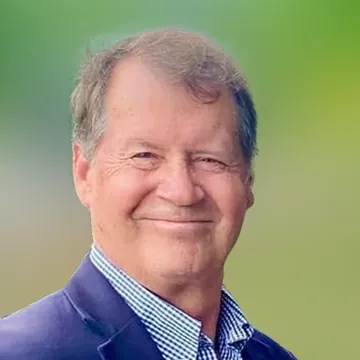
Dr. Jeff BozanicCo-founder, Training & SafetyEditor, NOAA Diving Manual (6th ed.); author, Mastering Rebreathers; NOGI laureate; NAUI Hall of Honor; Rolex Diver of the Year; Distinguished Eagle Scout
Dr. John ClarkeDive Physiology & Life SupportScientific Director, U.S. Navy Experimental Diving Unit for 28 years; leading authority on underwater breathing apparatus
Joel KozikowskiSenior Software & AIFour decades of software architecture; founder and CTO of Lighthouse Practice Management Group; leads Pneuma's AI guidance and sensing
Derek KoenigMarketingSVP Marketing, Discovery; SVP, Vail Resorts; VP Marketing APAC, The North Face; three decades building experience brands
Marjolein ScheepmakerHospitality OperationsOperations leadership with Van der Valk Group, the Netherlands' largest hospitality company; designs the guest journey and venue operations

Board of directors

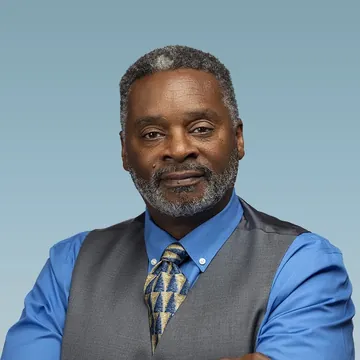
Billy CampbellDirectorPresident, Discovery Networks U.S.; CEO, Forbes Travel Guide; former CEO of GoBe, Royal Caribbean's travel company
Thatcher BrownDirectorSpecial Advisor - Cruise at Virtuoso Travel Group. Prior executive positions at, Four Seasons Yachts, Explora Journeys, Dream Cruises, and Costa Crociere.
Trip LeaDirectorFounding CFO, Pointer Management; co-founder, Margate Management and NuCapital; 40 years of capital markets

Advisors

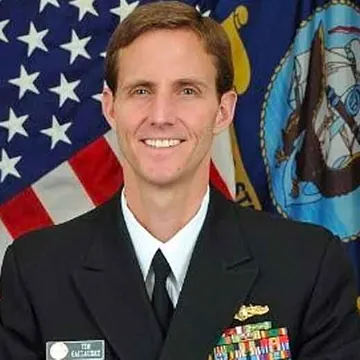
RDML Tim Gallaudet, USN (Ret.)Ocean policyFormer NOAA Administrator; Oceanographer of the Navy; PhD, Scripps Institution of Oceanography
Ian KoblickMarine engineeringTektite I and II aquanaut; designer, La Chalupa undersea laboratory; co-creator of the world's first underwater hotel
Dr. David GalloOcean scienceOceanographer; 30 years as Director of Special Projects, Woods Hole; co-led the Titanic mapping and Air France 447 searches
Les BurkeDive safetyNavy diver for 28 of 33 Navy years; instructor, Naval Diving & Salvage Training Center; Dive Safety Officer, University of Maryland
Two guests at the water's edge at sunset with Pneuma units

Water covers 71% of the Earth.

Now everyone can explore it.

Talk to us

Two conversations we are having right now.

Operators

Cruise lines, resorts, aquariums and lagoon developments. Tell us about your water, the season you run and the stage you are at. We will come to the site, and we will put you in the water at our Key Largo test site first.

Investors

Blue71 is raising to complete certification and commercialize the platform. Materials are available under NDA through our placement agent.